Washington 300
Biography
Nearly 300 years after his birth, George Washington (1732–1799) remains the most widely recognized, memorialized, and monumental figure in American history. His towering legacy extends far beyond U.S. borders, earning him an unmatched reverence reflected in the hundreds of monuments across the country and around the world erected in his honor, the nearly 100 million people who have visited his historic Virginia estate and tomb since 1860, and the more than 3,000 books that have been written about him over the past 250 years.
The nation’s capital, and countless counties, cities, schools, military installations, parks, roads, and bridges bear his name. His reputation rests not simply on his unparalleled achievements, but on his magnanimous character. From the time he was in his early 20s fighting in the French and Indian War to the time of his death at age 67, he risked his life, his fortune, and his sacred honor to form this new nation. He repeatedly put the good of the nation before his own benefit, resigning on two separate occasions to establish a revolutionary precedent that the people, not any single figure—as beloved as Washington was—would ultimately govern in the United States.
Born in Virginia and left fatherless at age 11, Washington educated himself and became a land surveyor. Throughout his life, he was influenced by two texts: The Rules of Civility and Joseph Addison’s play Cato: A Tragedy, which he had performed for his troops at Valley Forge.
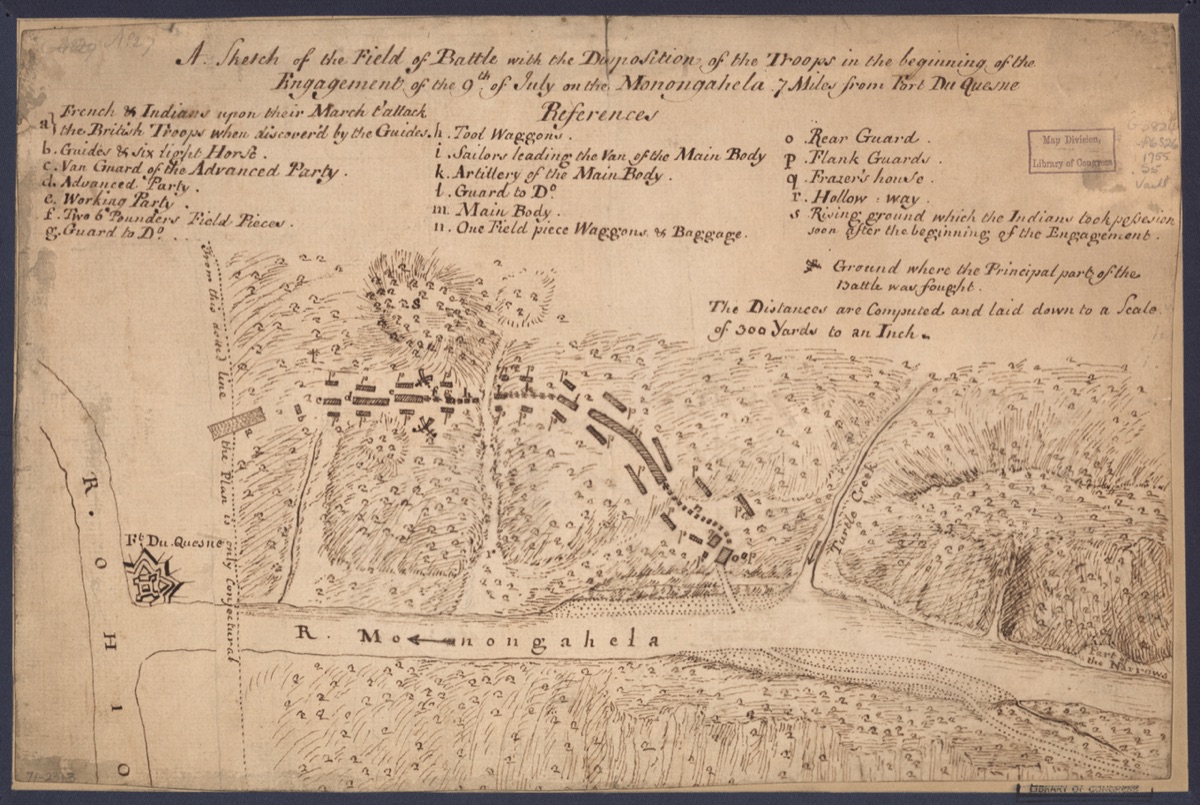
Washington first gained prominence as a young Virginia officer during the French and Indian War. In the disastrous 1755 Braddock campaign, Washington rode repeatedly through heavy fire while delivering orders. Multiple horses were shot from under him and bullets passed through his coat, yet he survived uninjured. Fifteen years later, Washington returned to the site of the conflict, where an old Indian chief—who had repeatedly but unsuccessfully fired shots at Washington during the battle—paid him homage, lauding him as “the man who is the particular favorite of Heaven, and who [can] never die in battle.” Washington, too, attributed his survival to Providence, stating that he had been preserved “beyond all human expectation.” He went on to command Virginia forces along the frontier, and these early experiences forged his courage, discipline, and judgment that later defined his career.
Following his service in the French and Indian War, he spent much of the two decades prior to the Revolution serving in the Virginia House of Burgesses. In 1774, in the wake of the passage of the Stamp Act, the Boston Massacre, and the imposition of the Intolerable Acts, Washington helped draft the Fairfax Resolves to defend the rights of the 13 colonies, emerging as a leading voice for independence.
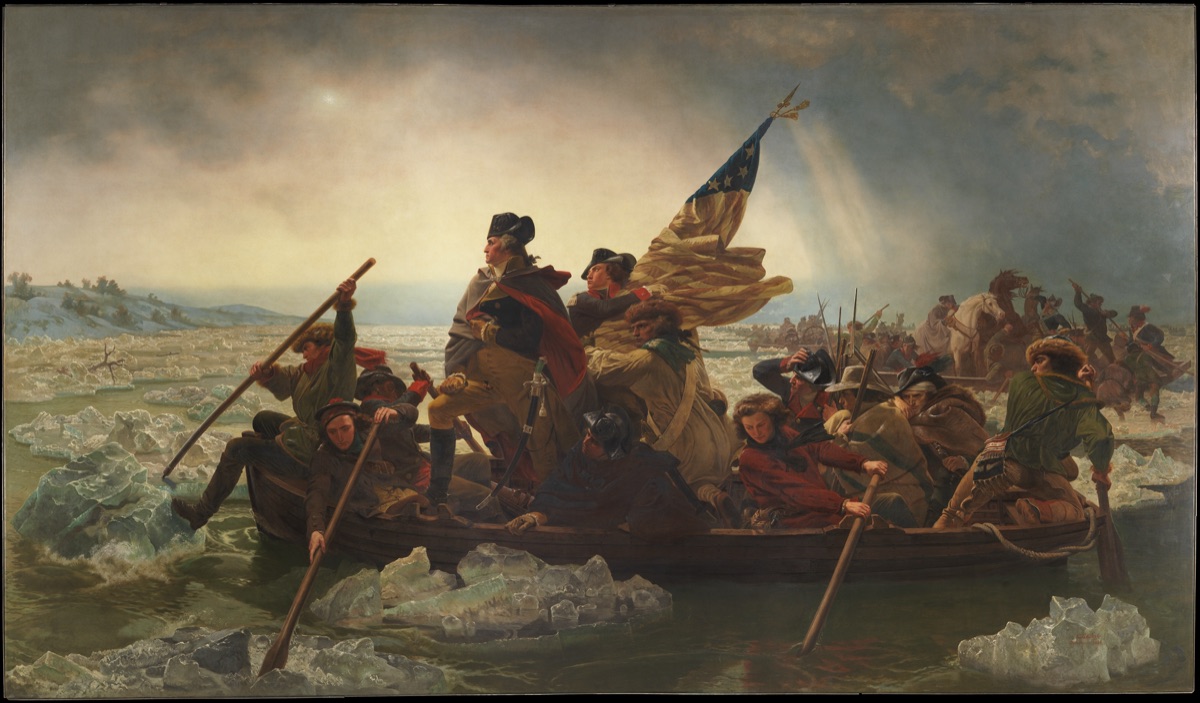
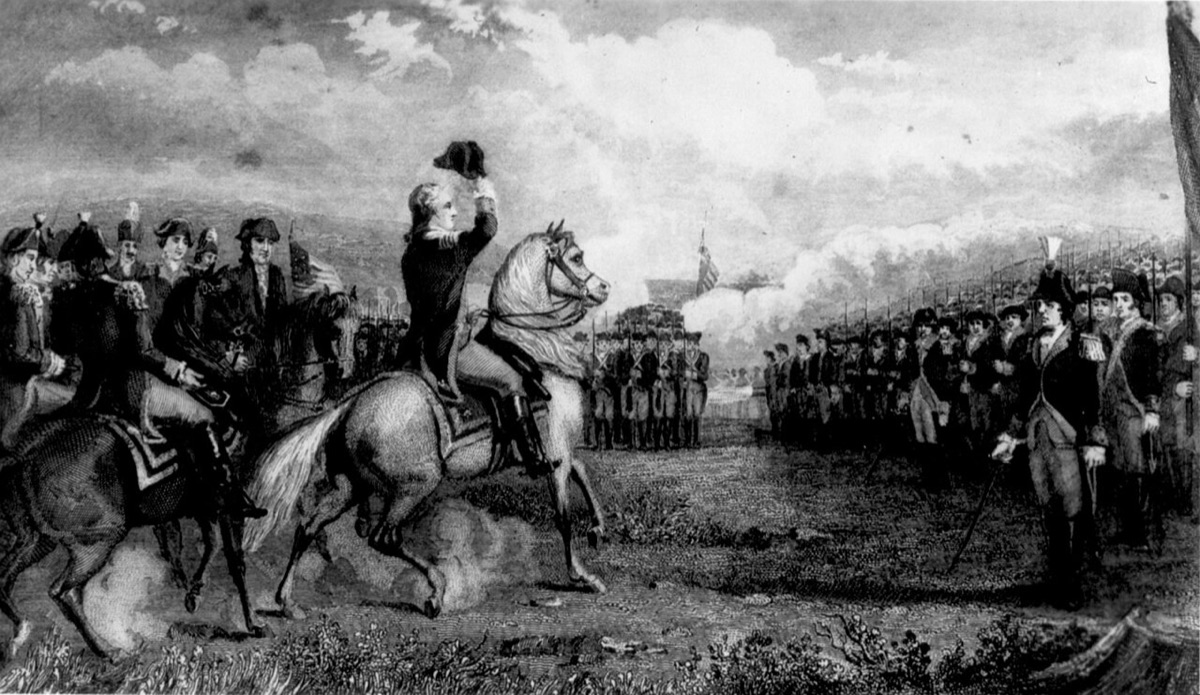
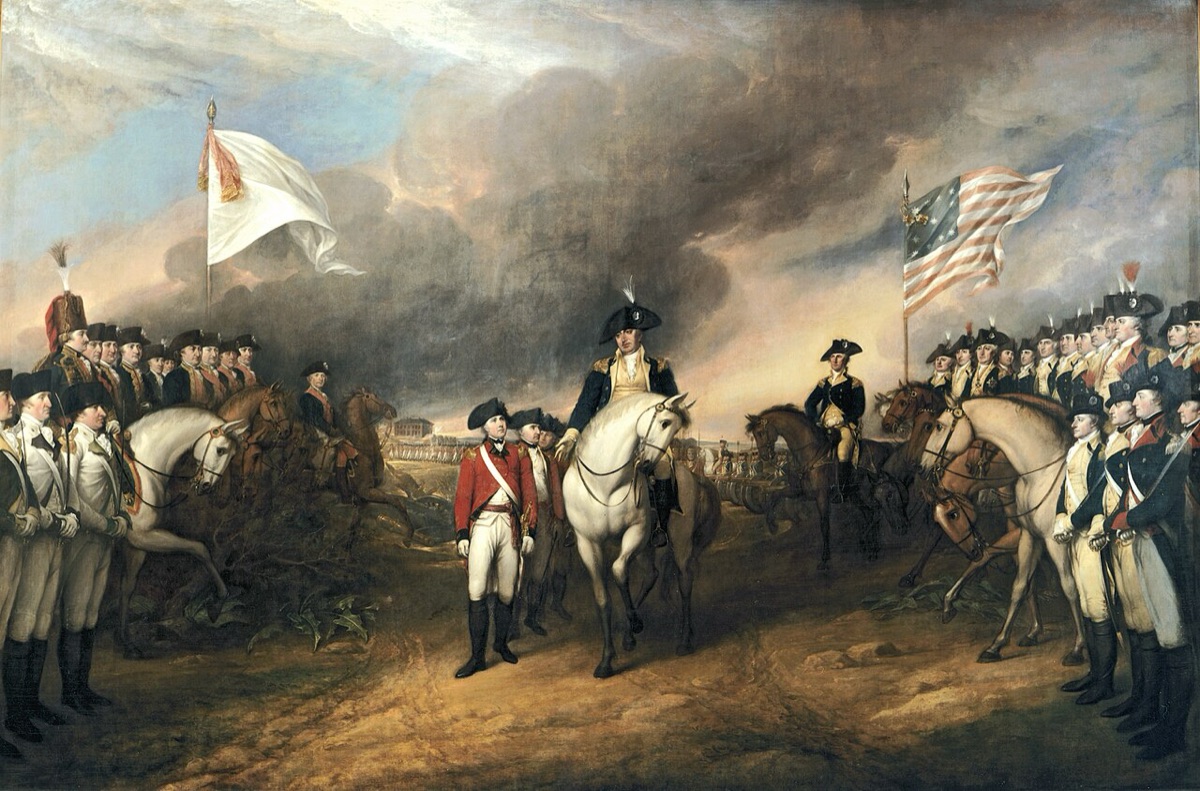
In 1775, weeks after the first shots of the Revolutionary War at Lexington and Concord, the Continental Congress unanimously selected Washington as Commander-in-Chief of the Continental Army. For eight years, he sustained a poorly supplied army through defeats, shortages, winter encampments, and political uncertainty. He led the army from Boston through Brooklyn, on to the daring crossing of the Delaware, victories at Trenton and Princeton, and the brutal winter at Valley Forge. In 1781, Washington secured an unthinkable victory at Yorktown, defeating the mightiest empire in the world.
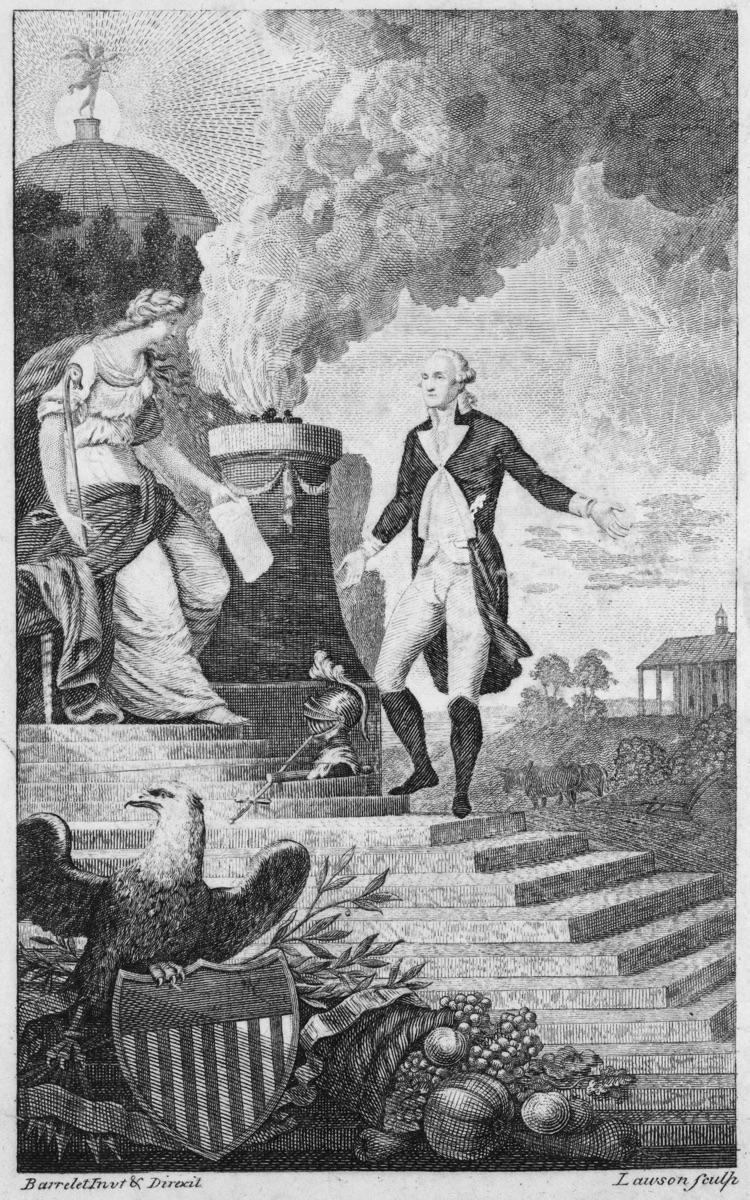
Washington’s greatest contribution, however, was not his ability to wield power over his enemies but his willingness to surrender it. As soon as the Treaty of Paris was signed, officially ending the war and establishing peace between Britain and the United States in 1783, Washington resigned as Commander-in-Chief and returned to Mount Vernon as a private citizen.
Upon resignation of his military commission, Washington issued a circular letter to the governors of the thirteen states. He closed that resignation with this prayer for the governors:
I now make it my earnest prayer, that God would have you, and the State over which you preside, in his holy protection; that he would incline the hearts of the Citizens to cultivate a spirit of subordination and obedience to Government; to entertain a brotherly affection and love for one another, for their fellow Citizens of the United States at large, and particularly for their brethren who have served in the Field; and finally, that he would most graciously be pleased to dispose us all, to do Justice, to love mercy, and to demean ourselves with that Charity, humility and pacific temper of mind, which were the Characteristics of the Divine Author of our blessed Religion, and without an humble imitation of whose example in these things, we can never hope to be a happy Nation.1
Across the Atlantic, King George III heard the news of Washington’s resignation from American painter Benjamin West and remarked:
If he does that, he will be the greatest man in the world.2
In March 1783, after the war’s fighting had ended but before the peace treaty was signed, Washington caught wind of a letter circulating through his frustrated soldiers at the Newburgh camp calling for an ultimatum to be sent to Congress demanding past-due pay. The Army was threatening to abandon the nascent nation—or do worse. Washington then called for a meeting of his officers. When he took the floor, he addressed the soldiers’ concerns and then pulled out a letter from his jacket. But to read the letter, he had to put on his reading glasses, then considered a sign of fragility. An officer recounted how Washington “took out his spectacles and begged the indulgence of his audience while he put them on, observing at the same time that he had grown gray in their service and now found himself growing blind.”3 Moved by Washington’s display of humility, the officers began to weep. With that simple, sincere gesture Washington diffused the crisis, ultimately ensured that his men were paid, and in so doing kept the young republic united in one of the first of many trials.
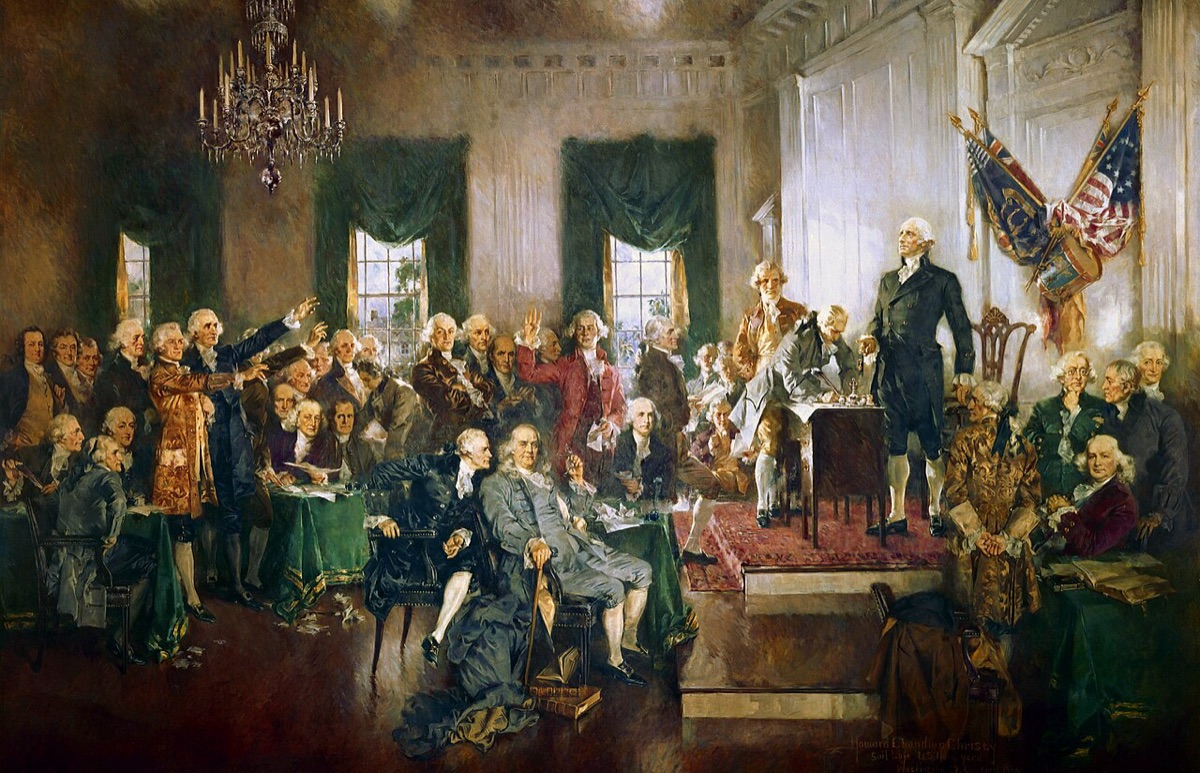
In the following years, as our young nation faced continued threats of instability under the Articles of Confederation, Washington once again departed his beloved Mount Vernon and answered the call of public service. He presided over the Constitutional Convention in 1787—immediately granting credibility to the U.S. Constitution—and was unanimously elected the first President of the United States in 1789. During his two terms, he established precedents that shaped the presidency: the cabinet system, civilian control of the military, a foreign policy of neutrality, and the peaceful transfer of power. In 1797, like the great Roman hero Cincinnatus, George Washington once again voluntarily stepped down from power, setting a two-term precedent that was ultimately formalized by the 22nd Amendment and remains a cornerstone of American presidency today.
In his famous Farewell Address, Washington warned against sectionalism, destructive party spirit, excessive public debt, executive overreach, and permanent foreign entanglements. He implored his fellow citizens to revere religion, morality, education, and national unity for the preservation of the republic. “Of all the dispositions and habits which lead to political prosperity,” Washington wrote, “religion and morality are indispensable supports.”
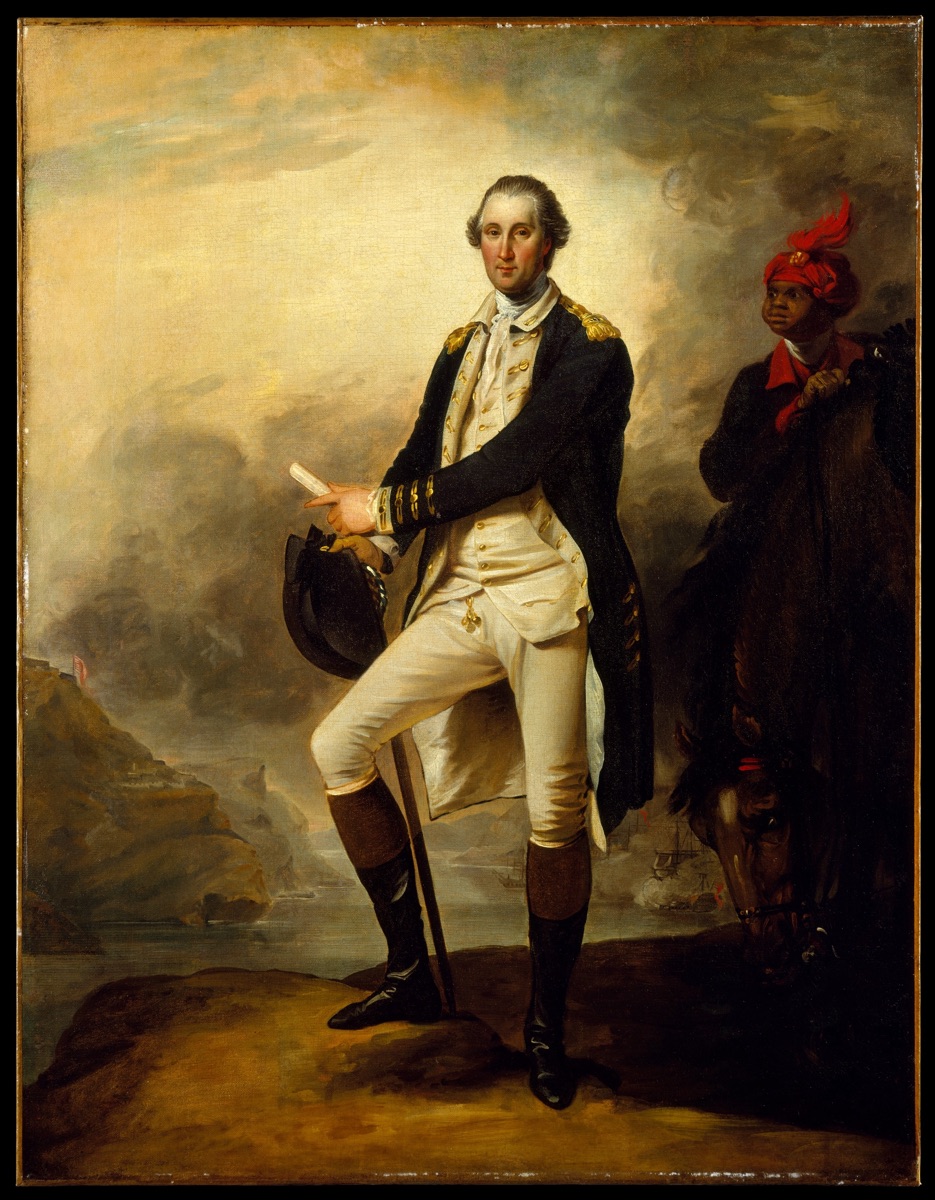
Washington’s views on slavery also changed over the course of his life. Raised in Virginia’s plantation culture, he inherited enslaved people as a child. By the Revolutionary era, however, Washington increasingly questioned slavery and supported efforts to restrict the slave trade. During the war, he reversed an early prohibition and permitted black soldiers to serve in the Continental Army. By the 1780s, he wrote that he wished to see slavery abolished by law and declared that he would not purchase another enslaved person unless compelled by circumstances. As president, he signed a federal law that forbade slavery in the federal territories that would become the states of Ohio, Indiana, Illinois, Michigan, Wisconsin, and Minnesota.4 As he wrote in a letter to Robert Morris in 1786, “There is not a man living who wishes more sincerely than I do to see a plan adopted for the abolition of it [slavery].”5
In 1794, President George Washington signed a federal law prohibiting the exportation of slaves from America to foreign countries, signaling that the United States would not actively help slavery grow in other nations.6 Throughout his later years, Washington experienced profound regret over his participation in slavery.
As he once confided to a friend: “The unfortunate condition of the persons, whose labor in part I employed, has been the only unavoidable subject of regret.… to lay a foundation to prepare the rising generation for a destiny different from that in which they were born, afforded some satisfaction to my mind and could not, I hoped, be displeasing to the justice of the Creator.”7 In his will, Washington arranged for the freedom of the enslaved people he personally owned.
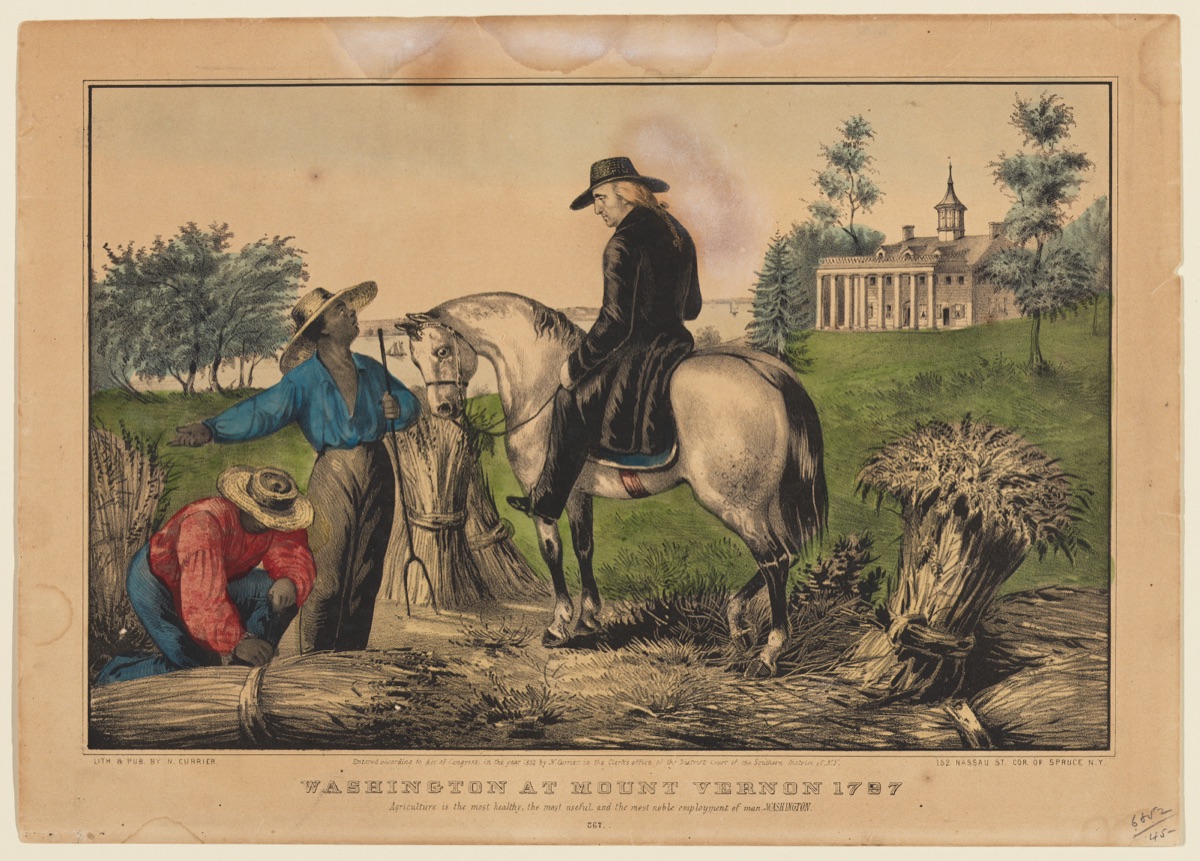
Without George Washington, the American republic very likely would have collapsed in its infancy. Acting as a steadying force during the nation’s formative years, he guided the United States toward stability, strength, and maturity. His contributions were so profound that citizens began honoring him as “The Father of His Country” well before his death.8By establishing the foundational principles and precedents that enabled the republic to thrive, Washington earned his enduring title: “The Indispensable Man.”9
While it would take volumes to truly capture the scope of George Washington’s life, his legacy can be distilled into two personal mottos: “Deeds, not Words,” and “For God and my Country.”10 As a leader, he did more than just guide a young America through its infancy; he illustrated the very principles of character, faith, leadership, and governance that would secure its future.
Timeline
1732
Born in Virginia
Left fatherless at eleven, he educated himself and became a land surveyor.
1755
The Braddock campaign
Horses were shot from under him and bullets passed through his coat; he came through unhurt.
1774
The Fairfax Resolves
After fifteen years in the House of Burgesses, he emerged as a leading voice for independence.
1775
Commander-in-Chief
Chosen unanimously by the Continental Congress weeks after Lexington and Concord.
1776
Crossing the Delaware
The crossing, then Trenton and Princeton, in a war he sustained for eight years.
1781
Yorktown
An unthinkable victory over the mightiest empire in the world.
1783
He gives up the sword
With the Treaty of Paris signed, he resigned his commission and went home a private citizen.
1787
The Convention
He presided, and his presence alone lent the new Constitution its credibility.
1789
First President
Two terms that set the precedents: a cabinet, civilian command, and a peaceful handover.
1797
Home to Mount Vernon
He stepped down a second time, and in his will freed the people he had enslaved.
Notes(10)
- George Washington to the States, June 8, 1783. National Archives: Founders Online. founders.archives.gov/documents/Washington/99-01-02-11404↩
- Joseph Farington, journal entry for December 28, 1799. The Farington Diary (London: Hutchinson & Co., 1922), I:278. www.mountvernon.org/library/digitalhistory/digital-encyclopedia/article/resignation-of-military-commission↩
- The Journals of Major Samuel Shaw, the First American Consul at Canton (Boston: Wm. Crosby and H. P. Nichols, 1847), 104. www.mountvernon.org/library/digitalhistory/past-projects/quotes/article/gentlemen-you-will-permit-me-to-put-on-my-spectacles-for-i-have-grown-not-only-gray-but-almost-blind-in-the-service-of-my-country↩
- “An Ordinance for the Government of the Territory of the United States North-west of the River Ohio,” July 13, 1787, expanded August 7, 1789. The Constitutions of the United States of America With the Latest Amendments (Philadelphia: Robert Campbell, 1800), 272; Daniel C. Wewers, Major Acts of Congress (The Gale Group, Inc., 2004), “Northwest Ordinance (1787),” accessed March 21, 2023. www.encyclopedia.com/history/united-states-and-canada/us-history/northwest-ordinance#2↩
- Washington to Robert Morris, April 12, 1786. The Writings of George Washington, ed. Worthington Chauncey Ford (New York: G. P. Putnam’s Sons, 1891), XI:25. encyclopediavirginia.org/primary-documents/letter-from-george-washington-to-robert-morris-april-12-1786/↩
- “An Act to Prohibit the Carrying on the Slave Trade from the United States to any Foreign Place or Country,” March 22, 1794. The Public Statutes at Large of the United States of America, ed. Richard Peters (Boston: Charles C. Little and James Brown, 1845), 1:347–349. www.battlefields.org/learn/primary-sources/act-prohibit-carrying-slave-trade-united-states-any-foreign-place-or-country↩
- David Humphreys, Life of George Washington with George Washington’s Remarks, ed. Rosemarie Zagarri (Athens: University of Georgia Press, 1991), 78. www.mountvernon.org/george-washington/slavery/the-only-unavoidable-subject-of-regret↩
- See, for example, Levi Allen to George Washington, January 27, 1776, The Papers of George Washington: Revolutionary War Series, ed. Philander D. Chase (1988), 3:195–197; Henry Knox to George Washington, November 26, 1777, ed. Frank E. Grizzard, Jr. (2002), 12:414–417; Henry Knox to George Washington, March 19, 1787, The Papers of George Washington: Confederation Series, ed. W. W. Abbot (Charlottesville: University Press of Virginia, 1997), 5:95–98; Abigail Adams to John Adams, March 25, 1797, Adams Family Correspondence, ed. Sara Martin (Cambridge: Harvard University Press, 2015), 12:48; and others. www.mountvernon.org/library/digitalhistory/digital-encyclopedia/article/father-of-his-country↩
- See, for example, James Thomas Flexner, Washington: The Indispensable Man (Boston: Little, Brown, and Co., 1974); Jay A. Parry & Andrew M. Allison, The Real George Washington: The True Story of America’s Most Indispensable Man (National Center for Constitutional Studies, 1991). www.mountvernon.org/george-washington/the-revolutionary-war/was-washington-the-indispensable-man/the-indispensable-man-mark-lender-responds↩
- Nelly Custis-Lewis to Jared Sparks, February 26, 1833. The Writings of George Washington, ed. Jared Sparks (Boston: Little, Brown, and Company), XII:407. www.crosswalk.com/special-coverage/america/a-presidents-day-story-for-the-ages-george-washington-and-the-italian-painter-who-honored-him.html↩
Images(5)
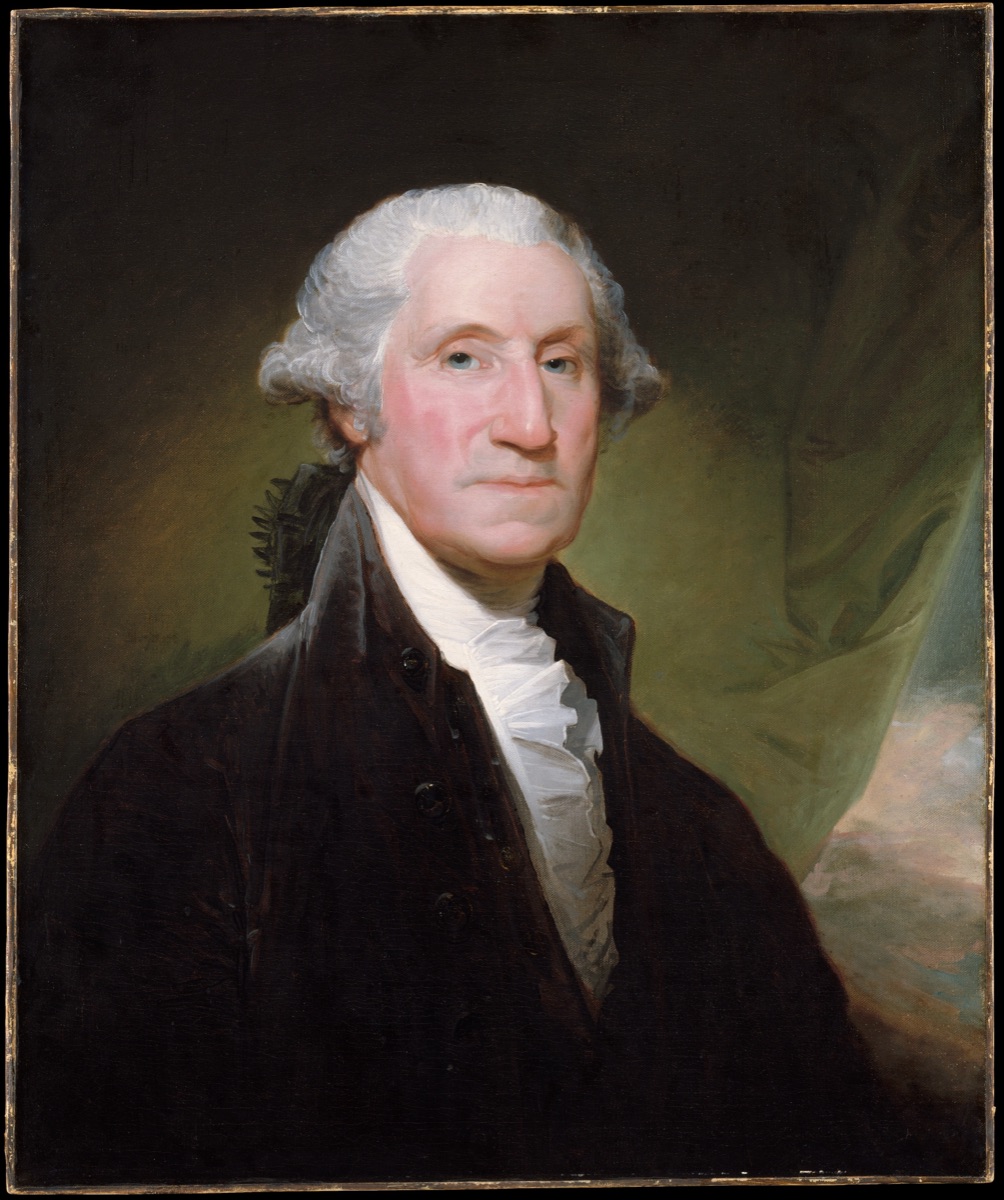
- Gilbert Stuart, George Washington, begun 1795. The Metropolitan Museum of Art. www.metmuseum.org/art/collection/search/16584
- Emanuel Leutze, Washington Crossing the Delaware, 1851. The Metropolitan Museum of Art. www.metmuseum.org/art/collection/search/11417
- Alexander Lawson, General Washington’s Resignation, 1799. The Metropolitan Museum of Art. www.metmuseum.org/art/collection/search/365746
- John Trumbull, George Washington and William Lee, 1780. The Metropolitan Museum of Art. www.metmuseum.org/art/collection/search/12822
- Nathaniel Currier, Washington at Mount Vernon 1797, about 1852. The Metropolitan Museum of Art. www.metmuseum.org/art/collection/search/850575
Testimonials
Both during his life and upon his death, Americans of all backgrounds praised Washington’s exceptional character and the indispensable role he played in founding the new nation. On December 14, 1799, George Washington died at the age of 67. Immediately, communities across the states held public ceremonies, funeral orations, and penned private letters of condolence to those who were fortunate enough to know Washington personally. More than 400 mourning ceremonies and more than 300 formal eulogies took place in the two months after his death. In recognition of Washington’s singular role in establishing the young republic, Congress designated February 22, 1800 as a National Day of Mourning and President John Adams issued a proclamation urging Americans to gather on that day to publicly testify their grief. The testimonies below record how world leaders, colleagues, family members, and friends revered Washington for his unparalleled leadership.
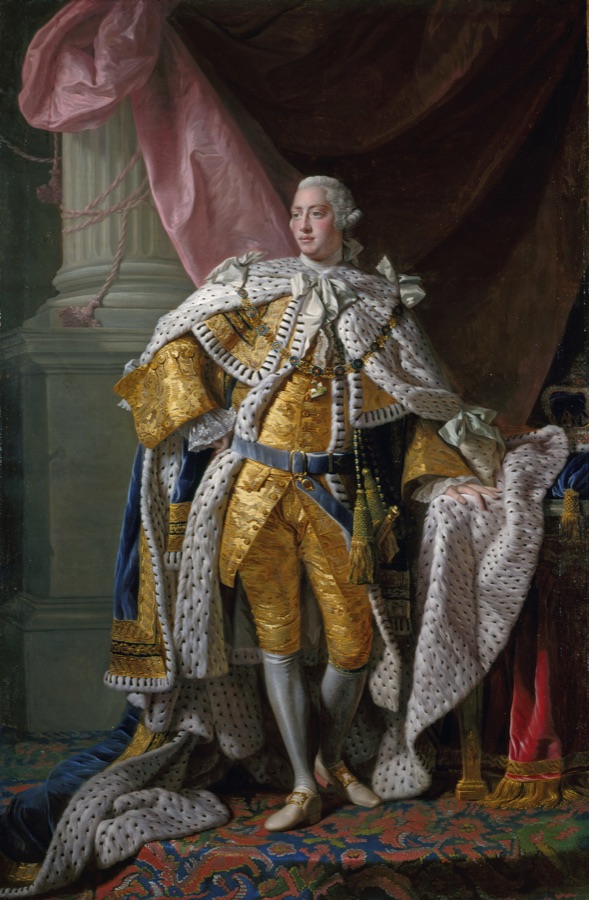
Allan Ramsay, George III, about 1762.
“If he does that, he will be the greatest man in the world.”
1 of 19
Notes(7)
- Abigail Adams to Mary Smith Cranch, December 22, 1799, National Archives. founders.archives.gov/documents/Adams/04-14-02-0049
- Thomas Jefferson to Walter Jones, January 2, 1814, Memoir, Correspondence, and Miscellanies, ed. Thomas Jefferson Randolph (Charlottesville: F. Carr & Co., 1829), IV:235–237. founders.archives.gov/documents/Jefferson/03-07-02-0052
- Francis Hopkinson, “Political Catechism,” 1777, The Miscellaneous Essays and Occasional Writings of Francis Hopkinson (Philadelphia: T. Dobson, 1792), I:119–120. quod.lib.umich.edu/cgi/t/text/text-idx?c=evans;cc=evans;rgn=main;view=text;idno=N18777.0001.001
- John Marshall’s speech in the House of Representatives, December 19, 1799, in Washington Irving, The Life of George Washington (New York: G. P. Putnam’s Sons, 1876), II:783–784. www.gutenberg.org/files/28859/28859-h/28859-h.htm
- Gouverneur Morris, “An Oration upon the Death of General Washington,” December 31, 1799, Eulogies and Orations on the Life and Death of General George Washington (Boston: Manning and Loring, 1800), 44, 46–47, 53–54. archive.org/details/eulogiesorations00bost/page/44/mode/2up
- Abigail Adams to Mary Smith Cranch, January 5, 1790, Adams Family Correspondence, ed. Margaret A. Hogan (Cambridge: Belknap Press, 2009), 9:1–2. www.masshist.org/publications/adams-papers/index.php/view/ADMS-04-09-02-0001
- Abbé Robin, New Travels Through North America: in a Series of Letters (Philadelphia: Robert Bell, 1783), 34–35. archive.org/details/newtravelsthroug00robi/page/34/mode/2up
Washington Monument
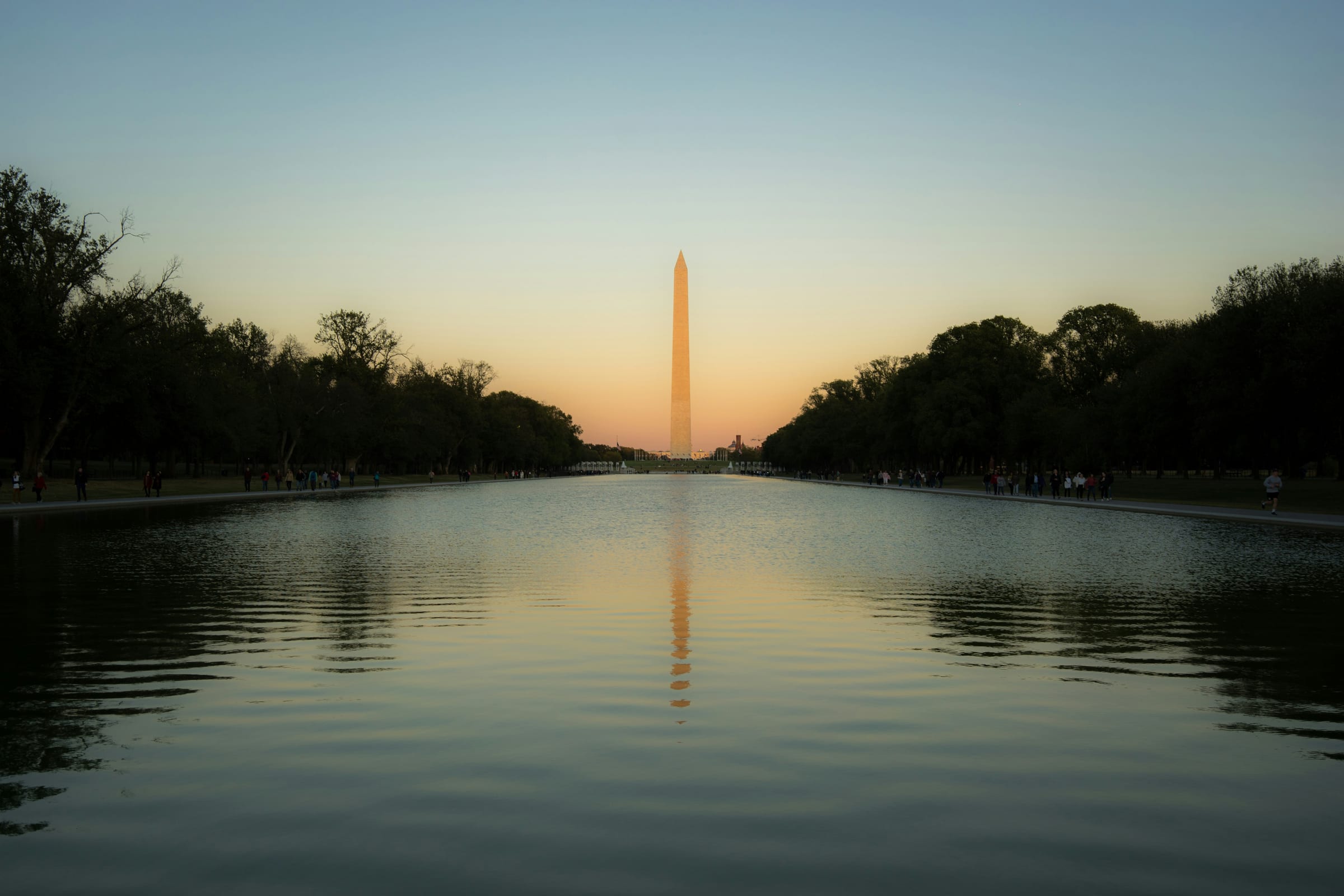
Long before the Washington Monument rose above Washington D.C., Americans had begun planning a national tribute to America’s first President of the United States. In 1783, the same year the Treaty of Paris officially ended the American Revolutionary War, the Continental Congress unanimously authorized a bronze equestrian statue of Washington, with instructions to commission the best artist in Europe to sculpt it.
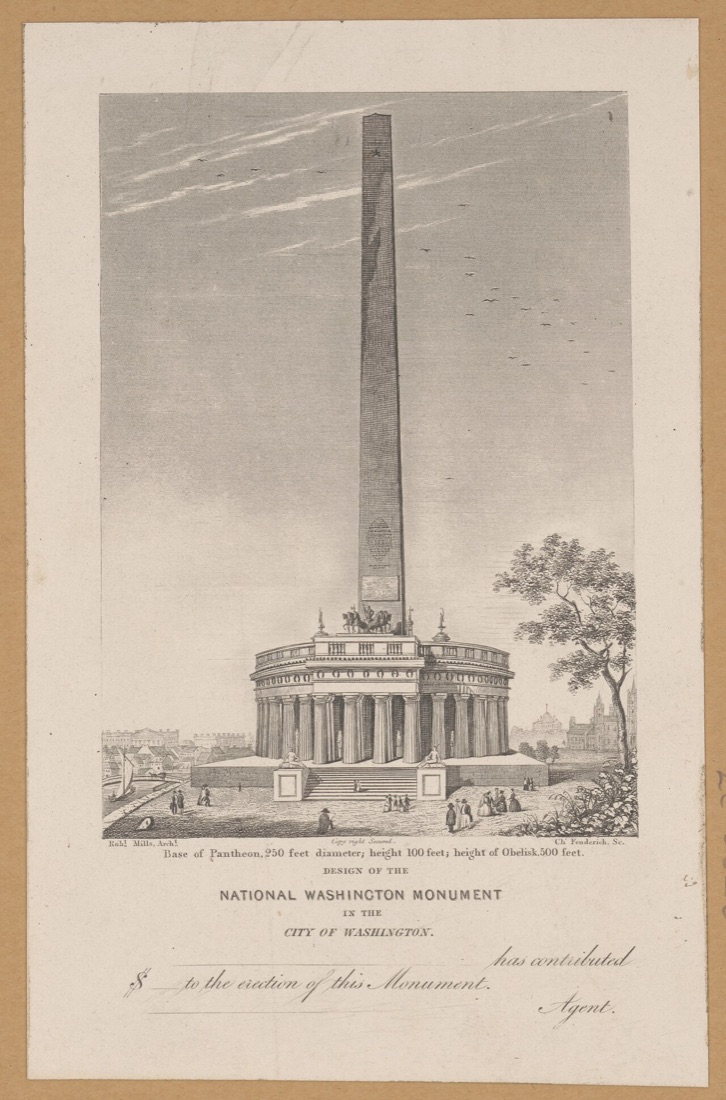
When Pierre Charles L’Enfant prepared his plan for the capital in 1791, he placed the proposed statue between the Capitol and the President’s mansion, making it a central attraction in the design for the new city. The monument stands near that intended location today.
In 1832, the Centennial of Washington’s birth, Congress revived a proposal to move his remains from Mount Vernon to a tomb beneath the Capitol. The family declined the request since it was Washington’s personal wish to be buried at Mount Vernon, but private citizens soon established the Washington National Monument Society to raise funds and build a monument to honor his legacy.
The society’s ambition was to erect a memorial “whose splendor will be without parallel in the world.” The society solicited donations across the country, initially limiting contributions to one dollar per person per year to encourage broad participation.
On July 4, 1848, more than 20,000 people gathered for the ceremony to lay the monument’s cornerstone. Those present included President James K. Polk, Dolley Madison, Alexander Hamilton’s widow, Eliza, George Washington Parke Custis, and future presidents James Buchanan, Abraham Lincoln, and Andrew Johnson.
The monument’s 24,500-pound cornerstone contained a zinc case holding copies of the Declaration of Independence and Constitution. States, cities, civic organizations, and foreign donors supplied commemorative stones for the interior. One particularly remarkable gift came from Greece: a marble stone from the Parthenon. Today, the monument’s interior contains 193 commemorative stones, bearing the names and messages of those who contributed them.
Financial difficulties halted the construction in 1854, and the Civil War prolonged the delay. But in 1876, as Americans celebrated a century of independence, Congress committed federal support to complete the monument.
On December 6, 1884, the monument was completed and stood at 555.5 feet, making it the tallest building in the world. America honored its first president with a structure that surpassed every cathedral, palace, and tower then standing.
On the east side of its aluminum tip, facing the rising sun, were the Latin words “Laus Deo,” meaning “Praise be to God.”
The monument’s formal dedication took place on February 21, 1885, the eve of Washington’s 153rd birthday. At the ceremony, Senator John Sherman called the monument “the most imposing, costly, and appropriate monument ever erected in the honor of one man.”
The Washington Monument stands today as a lasting expression of the American people’s gratitude for the father of our nation.
Images(2)
- Wouter van Dijke, the Washington Monument at sunset. Via Unsplash. unsplash.com/photos/Vsjj2uAGT7M
- Robert Mills, Design of the National Washington Monument in the City of Washington. Public domain, via Wikimedia Commons. commons.wikimedia.org/wiki/File:Design_of_the_National_Washington_Monument_in_the_City_of_Washington_(NYPL_b13512823-424192).jpg
Centennial
The 100th Anniversary of Washington’s Birth
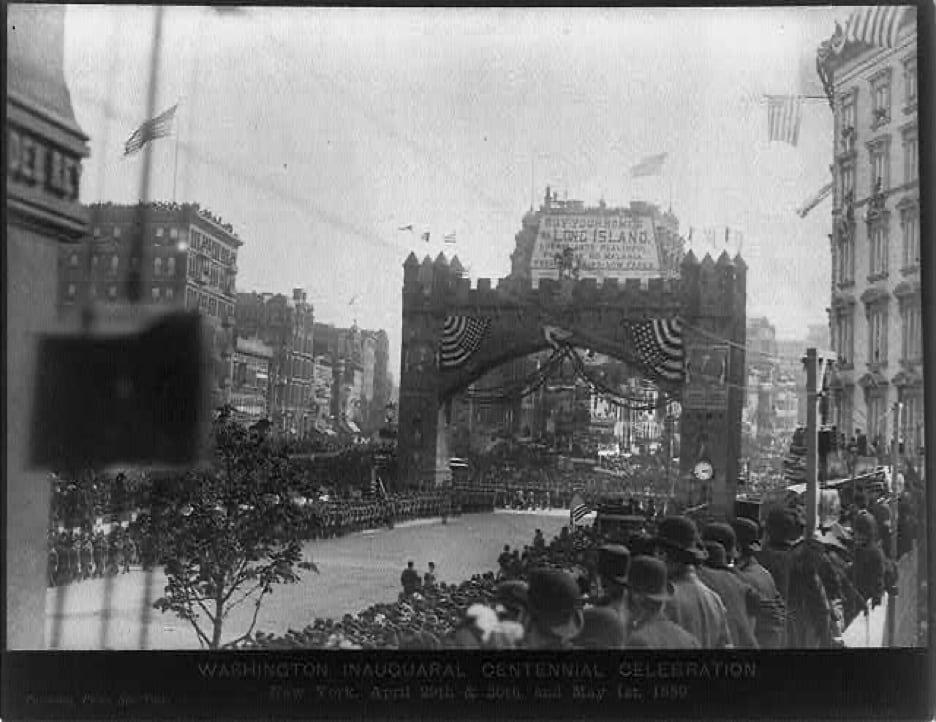
On February 22, 1832, Americans marked the 100th anniversary of George Washington’s birth with celebrations across the country. The anniversary came amid sweeping territorial expansion and mounting constitutional and political tensions.
Congress established a joint committee for the centennial of Washington’s birth. At the committee’s recommendation, both chambers suspended business from February 21 to February 23 to honor Washington’s memory. Americans across the country hosted parades, public dinners, and historic events. During a parade in Philadelphia, comprised of government officials, tradesmen, volunteer fire companies, military units, and ordinary citizens, a group of gold and silver craftsmen threw coins that bore Washington’s portrait with the Latin phrase “Pater Patriae,” meaning “Father of the Country.”
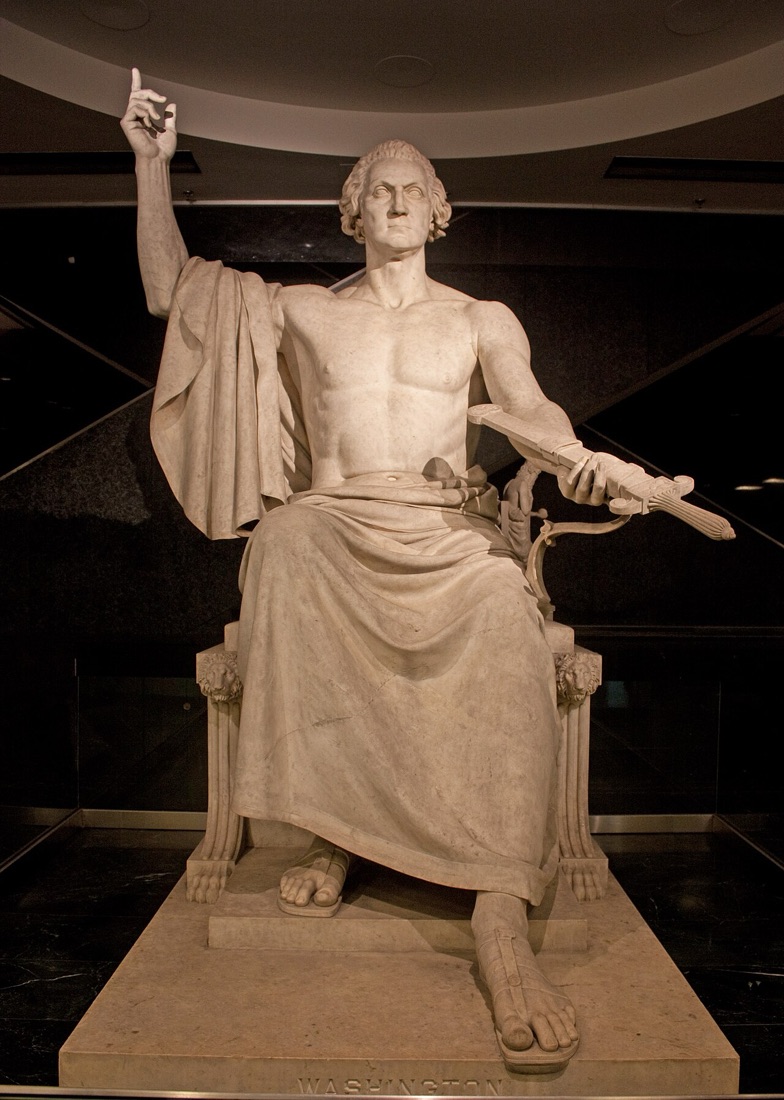
Congress also commissioned a grand statue of Washington for the Capitol rotunda. At a public dinner in Washington, D.C., then-Senator Daniel Webster declared that Washington’s name “will for ever be pronounced with affectionate gratitude by every one in whose breast there shall arise an aspiration for human rights and human liberty.”
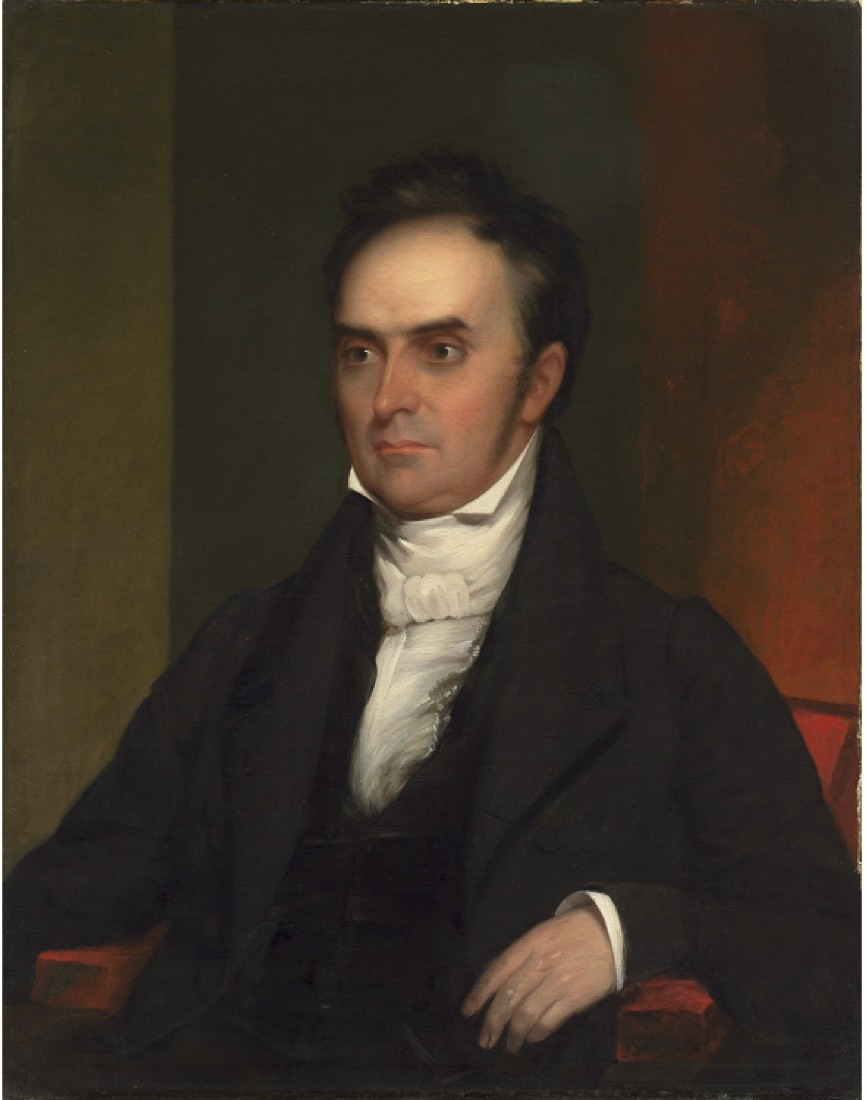
Webster famously predicted that on Washington’s 200th birthday anniversary, “other disciples of Washington will celebrate his birth.” With the same admiration he expressed hope that the American flag would also still wave atop the Capitol on Washington’s 200th birthday.
Images(3)
- Washington Inaugural Centennial celebration, New York, 1889. Supplied by the client; via Mount Vernon.
- Horatio Greenough, George Washington, 1840. Public domain, via Wikimedia Commons. commons.wikimedia.org/wiki/File:George_Washington_Greenough_statue.jpg
- Chester Harding, Daniel Webster. National Portrait Gallery, public domain, via Wikimedia Commons. commons.wikimedia.org/wiki/File:Chester_Harding_-_Daniel_Webster_-_NPG.67.59_-_National_Portrait_Gallery.jpg
Bicentennial
The 200th Anniversary of Washington’s Birth
In 1932, Americans marked the 200th anniversary of George Washington’s birth with celebrations stretching from coast to coast. The festivities lasted from January through Thanksgiving Day. Preparations began more than seven years earlier, when President Calvin Coolidge signed a joint resolution of Congress establishing the George Washington Bicentennial Commission to organize and promote the observance.
As they planned the forthcoming anniversary, Coolidge addressed Congress and declared: “His was the directing spirit without which there would have been no independence, no Union, no Constitution, and no Republic.”
The commission urged state and local leaders to form their own planning committees, and Americans responded resoundingly. 894,224 local committees were formed, more than 4 million local events were organized, and an estimated 30 million memorial trees were planted.
To open the bicentennial anniversary on February 22, 1932, President Herbert Hoover addressed a joint session of Congress.
Recalling Daniel Webster’s words a century earlier, Hoover declared: “The time that Webster looked forward to is here. We ‘other disciples of Washington’ whom he foresaw are gathered today. His prophecy is borne out, his hope fulfilled. That flag ‘still floats from the top of the Capitol.’ It has come unscathed through foreign war and the threat of internal division. Its only change is the symbol of growth. The 13 stars that Washington saw, and the 24 that Webster looked upon, now are 48.”
Notably, these celebrations happened during the hardships of the Great Depression. In the months leading up to the bicentennial, Hoover appealed to Washington’s endurance as a source of encouragement. Speaking at Valley Forge on May 30, 1931, he declared that Americans were going through “another Valley Forge” and urged them to meet their difficulties with the steadfastness of Washington and his soldiers.
During the months long celebration, communities gave the national observance their own expression. In La Crosse, Wisconsin, more than 600 residents performed in a pageant portraying Washington’s life, with more than 10,000 people attending the finale. In Brooklyn, New York, a replica of Mount Vernon was built. The Smithsonian also hosted a bicentennial exhibition of paintings, sculpture, and large murals depicting Washington’s life in the then-National Gallery of Art.
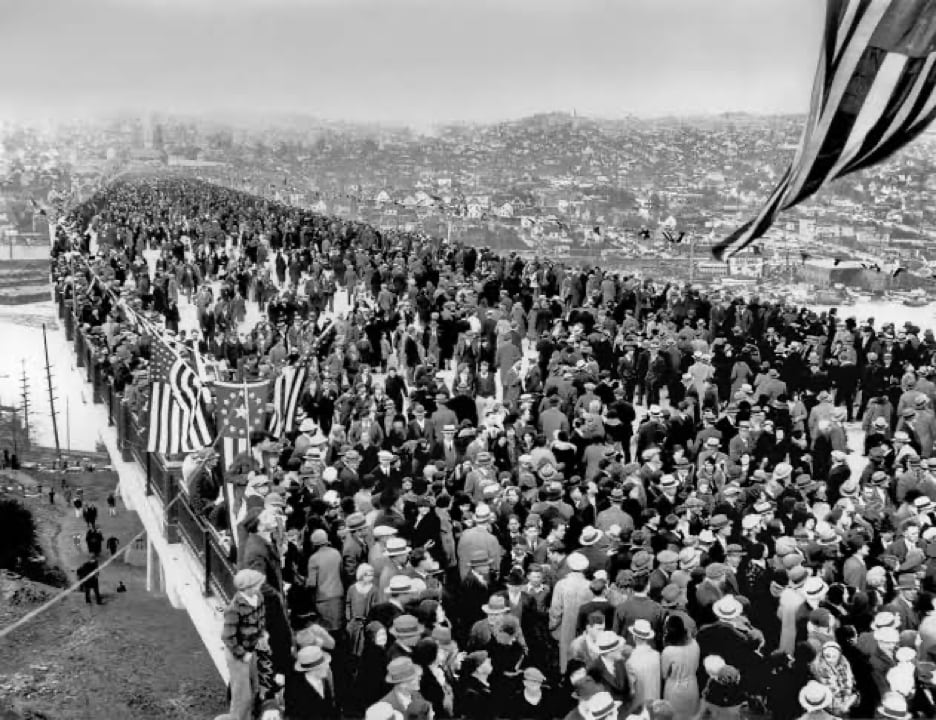
In his hometown of Alexandria, Virginia, the George Washington Masonic National Memorial was dedicated in May 1932. That year also saw the opening of Arlington Memorial Bridge and the Mount Vernon Memorial Highway, now the George Washington Memorial Highway. The highway was the nation’s first modern motorway built by the federal government. Together with the bridge, it provided a scenic route connecting the capital city to Washington’s Mount Vernon estate.
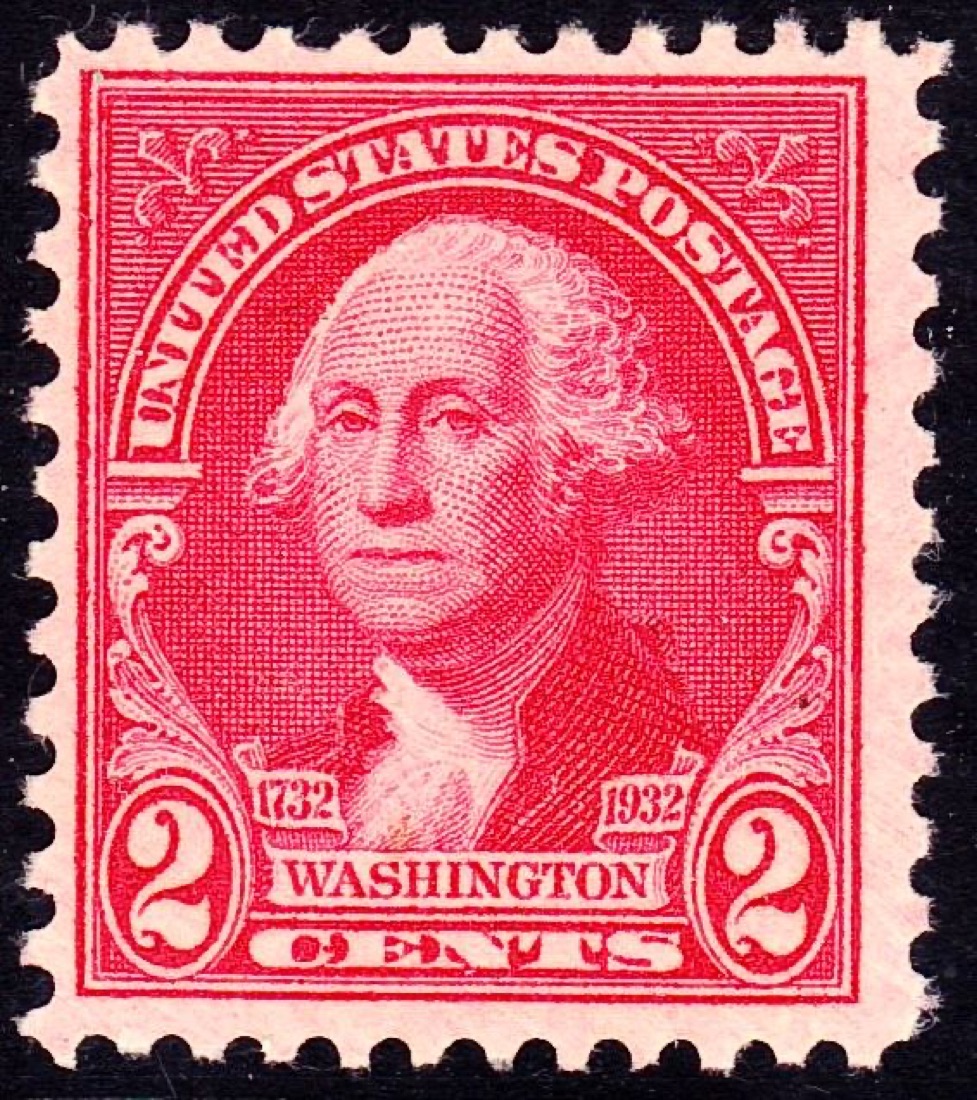
The Post Office issued twelve commemorative stamps portraying Washington at different stages of his life. Perhaps the most iconic and lasting legacy of the celebration ended up in the pockets of every single American: the U.S. Mint replaced the Standing Liberty quarter with a new design bearing Washington’s profile, becoming an enduring part of American currency still used today.
Images(2)
- The opening of Seattle’s George Washington Memorial Bridge, 1932. Supplied by the client.
- United States Post Office, Washington Bicentennial two-cent stamp, 1932. Public domain, via Wikimedia Commons. commons.wikimedia.org/wiki/File:Washington_Bicentennial_1932_2c.jpg
Tricentennial
The 300th Anniversary of Washington’s Birth
Following the nation’s historic celebration of the 250th anniversary of American independence on July 4, 2026, the country will soon turn its attention to one of our next major milestones: the tricentennial of Washington’s birth on February 22, 2032. Because there is currently no major exhibit dedicated to Washington featured in the Smithsonian Institution, America’s premier national museum complex, President Donald Trump has invited the Institution to begin preparations for a “Washington 300” exhibit to honor our first Commander-in-Chief as we approach this landmark occasion. The President looks forward to working alongside the Smithsonian Institution to celebrate the father of our country in a manner worthy of his extraordinary life and legacy.
Colossus Washington Statue
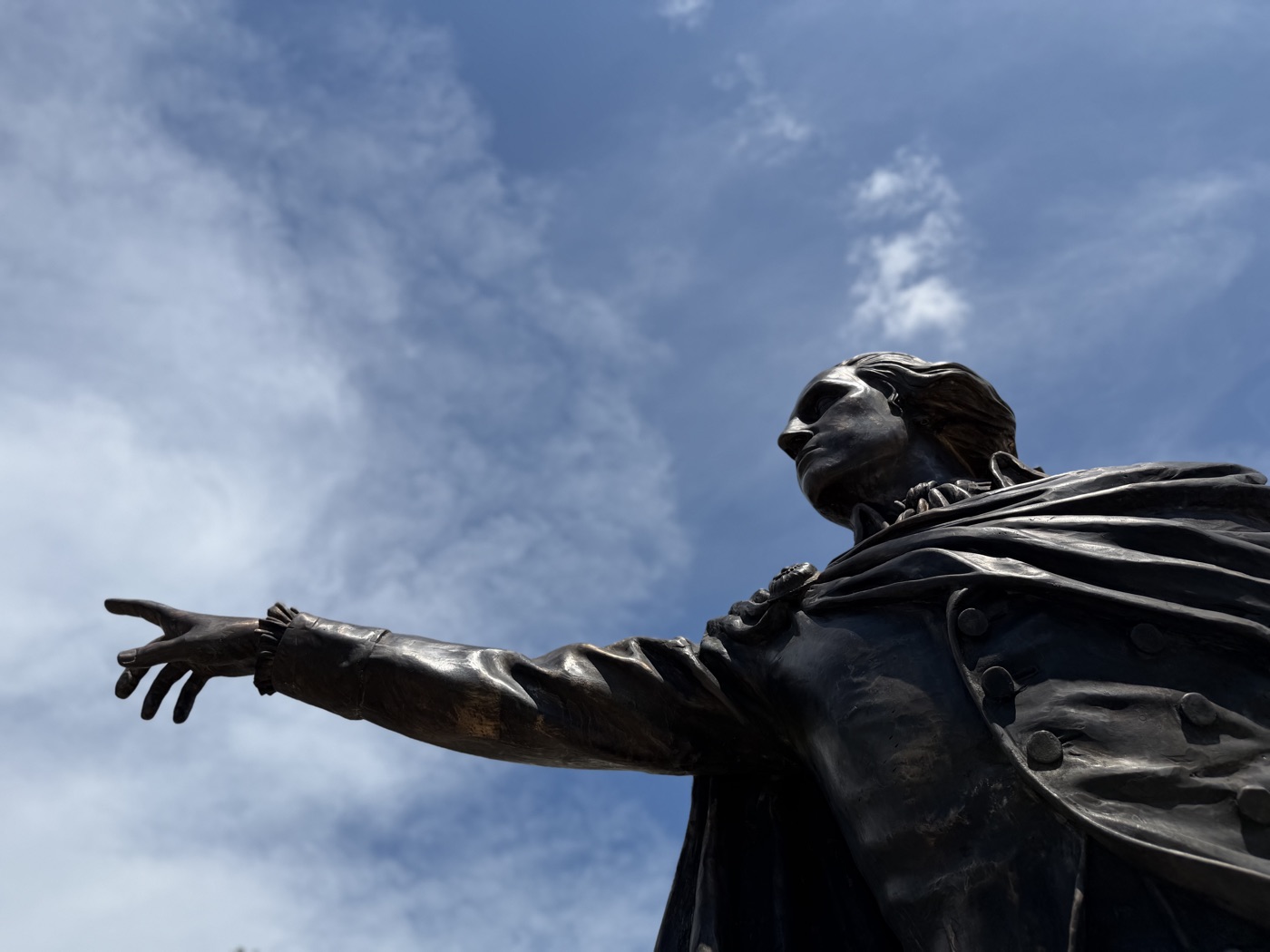
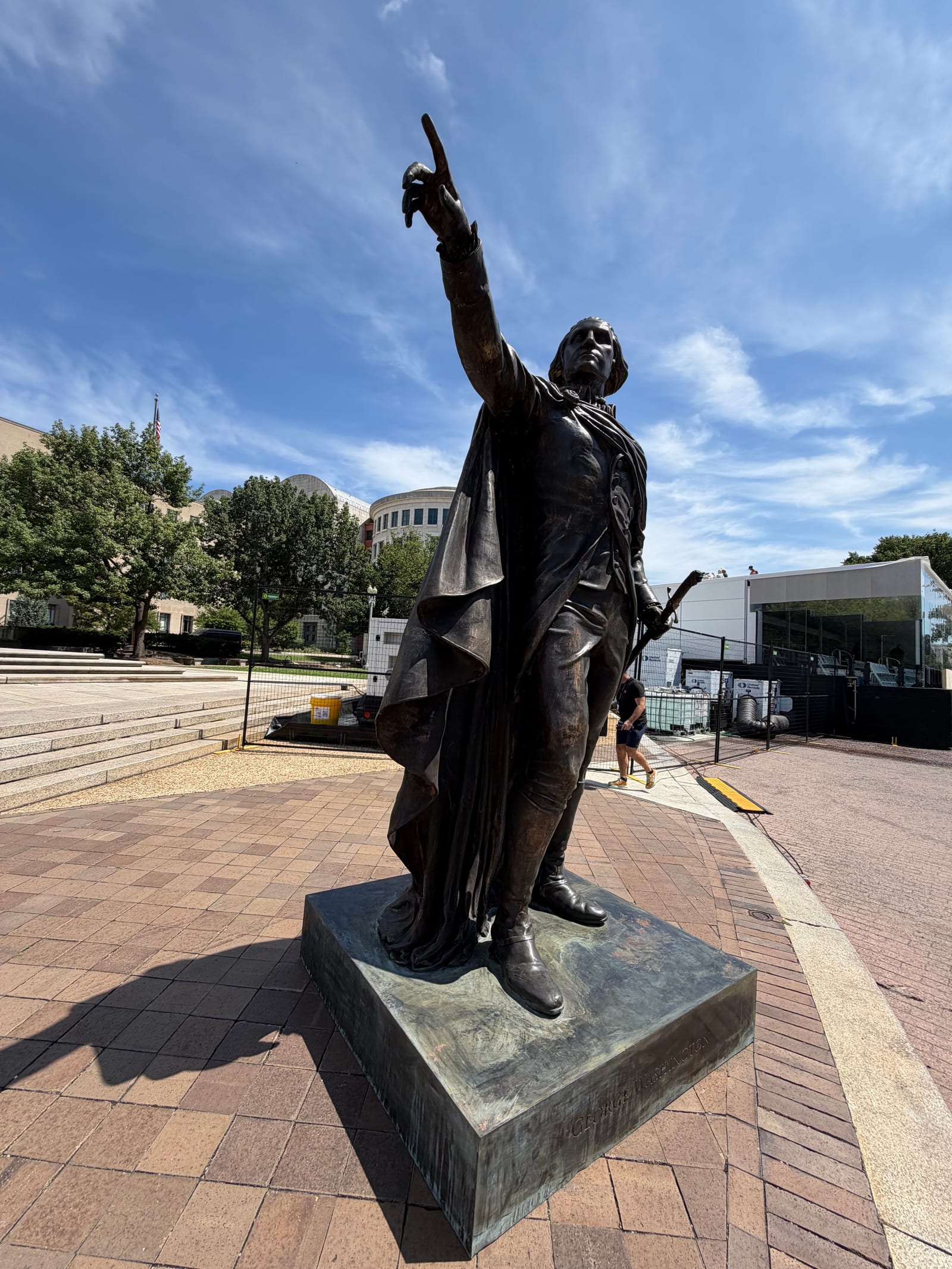
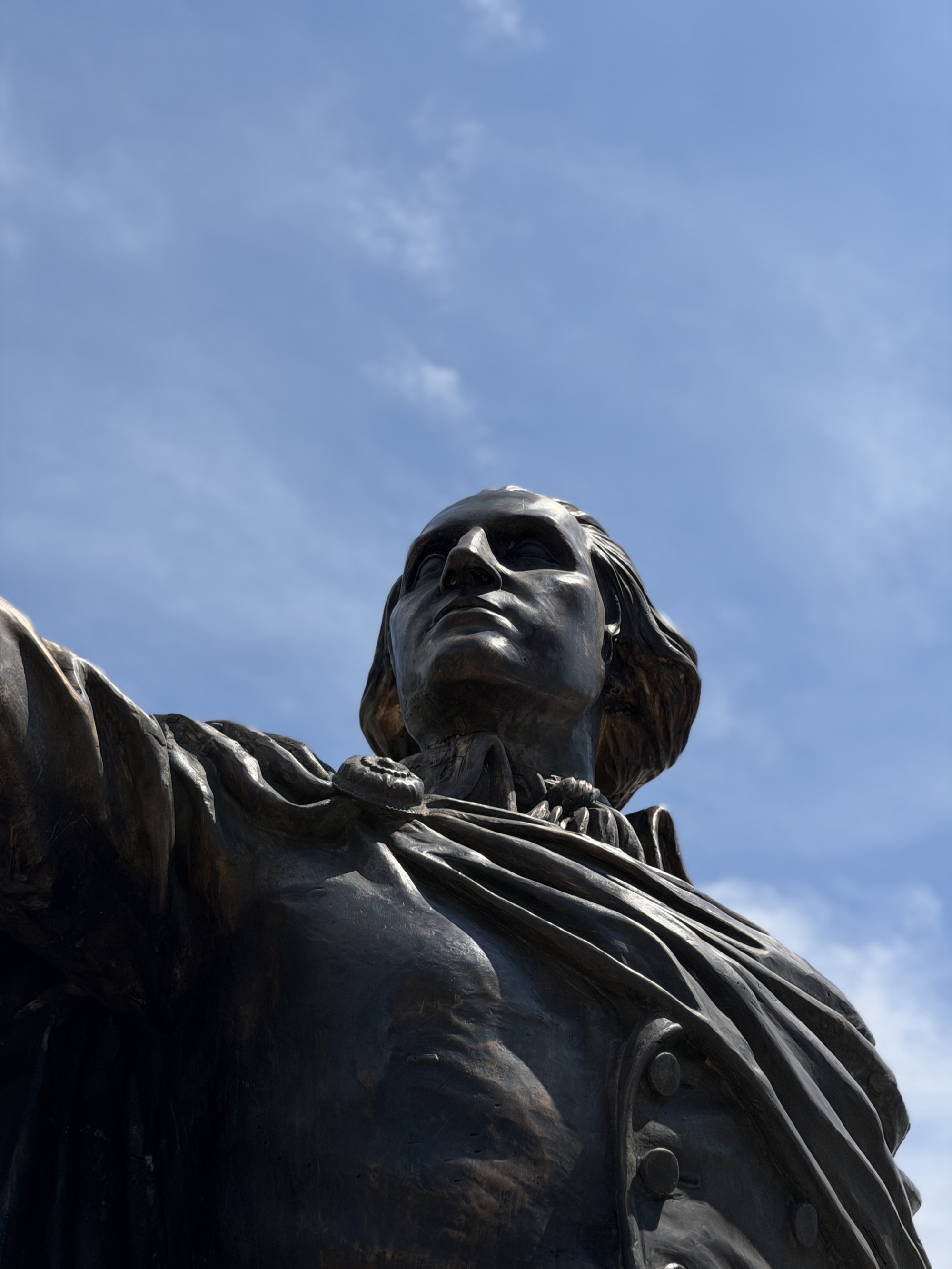
The 30-foot George Washington statue will point west—toward the frontier that shaped his life and the vast continent that would become the future of the nation he founded. The gesture brings together two powerful traditions: the outstretched arm as a symbol of leadership and vision, and the West as an American symbol of exploration, expansion, and possibility.
For Washington, the West was deeply personal. As a young surveyor at just 16 years old, he crossed the Blue Ridge into the Shenandoah Valley. At age 21, he crossed the Alleghenies into the Ohio Country as an emissary and soldier, experiencing firsthand the immense frontier beyond the colonies. These journeys shaped his belief that America’s future lay westward. He later championed efforts to connect the Potomac with the Ohio Valley, helping bind the growing West to the new Republic.
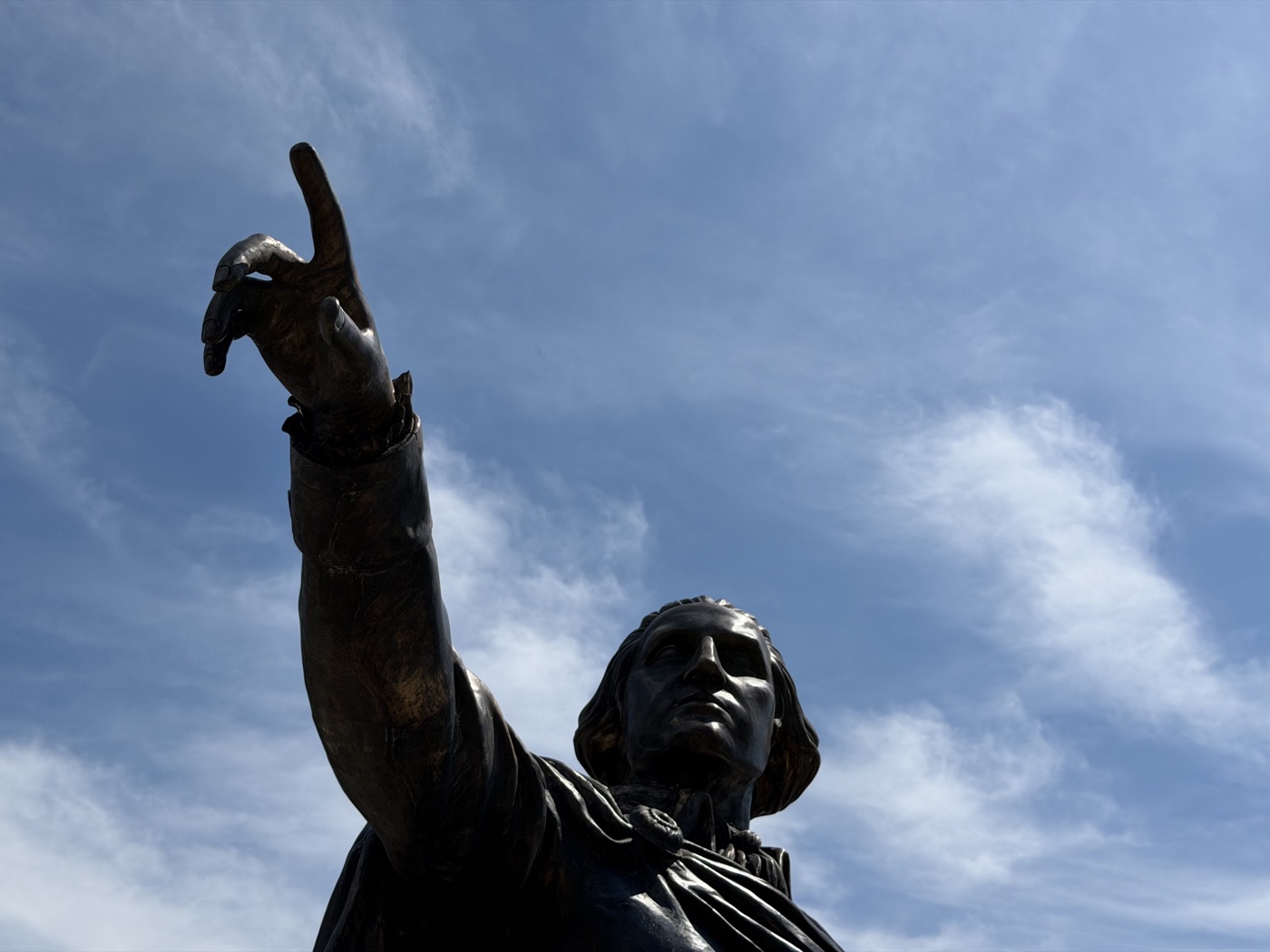
The gesture itself reaches back to antiquity. In ancient Rome, leaders were often shown with an arm extended in the adlocutio pose, the gesture of a commander addressing and directing his people. The famous Augustus of Prima Porta uses this commanding gesture, establishing a visual language of authority and leadership that echoes through centuries of monumental art.
In America, that ancient gesture took on a distinctly American meaning as the Nation turned westward. At the U.S. Capitol, Westward Ho (1860) and Westward the Course of Empire Takes Its Way (1861–62) show Americans moving and gesturing toward the West as a symbol of exploration, expansion, and the country’s future. Harriet Hosmer’s monument to Senator Thomas Hart Benton carried the same powerful westward vision.
Washington lived before the phrase “Manifest Destiny” was coined, but his vision anticipated the continental future it would later describe. His westward gesture gives that vision monumental form.
Standing at the birth of the Republic, Washington points west—toward the frontier, toward a continent of possibility, and toward the American future.